Public health authorities have detected the first human case in the United States of travel-associated New World screwworm (NWS), according to an August 24 Reuters story.
The Department of Health and Human Services (HHS) and Centers for Disease Control and Prevention (CDC) identified a case of the flesh-eating parasite on August 4 in a person in Maryland who returned to the U.S. after traveling to El Salvador, the U.S. Department of Agriculture (USDA) said in an August 26 announcement.
The case is being investigated by the CDC and Maryland Department of Health.
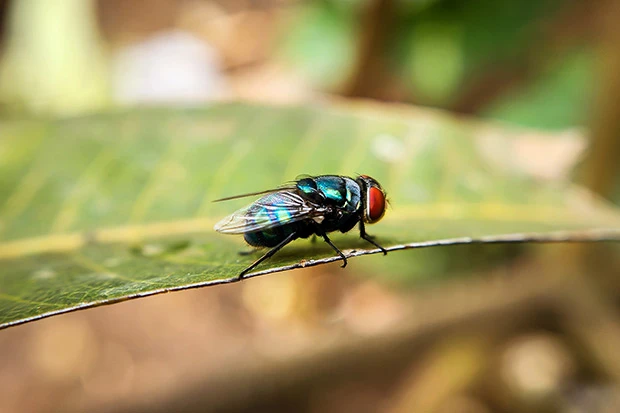
A travel-associated human case of New World screwworm (NWS) has been confirmed by the Centers for Disease Control and Prevention. NWS, Cochliomyia hominivorax, is a parasitic fly that lays eggs in and on open wounds and mucous membranes of warm-blooded animals. NWS larvae burrow into the flesh of these animals and eat healthy living tissue. NWS can infest livestock, pets, wildlife, and in rare cases, people.
Dr. Beth Thompson, South Dakota’s state veterinarian and president of the National Assembly of State Animal Health Officials, said the CDC last week had notified a group of state animal health officials and veterinarians about the case, which was first reported by Reuters.
Out of caution, the USDA is conducting targeted surveillance for NWS within a 20-mile radius of the affected area, encompassing portions of the District of Columbia, Maryland, and Virginia. To date, all trap results have been negative for NWS.
“We may continue to see traveler-associated cases of NWS and USDA, in coordination with HHS and CDC, will conduct targeted surveillance to ensure there is no active spread of NWS in the United States,” the USDA announcement stated. “This is not cause for alarm as human risk is low and we have seen several isolated cases in recent years that have not resulted in livestock transmission.”
The last detections of NWS in the U.S. in livestock or other animals occurred among Key deer in the Florida Keys, which was resolved in 2017, according to the USDA .
Federal agencies have recently stepped up efforts to prevent NWS from entering the U.S. and prepare for its incursion.
On August 19, HHS issued a declaration empowering the Food and Drug Administration to grant emergency use authorizations for animal drugs to treat or prevent infestations caused by screwworm.
Just days before, on August 15, U.S. Secretary of Agriculture Brooke Rollins and Texas Gov. Greg Abbott announced enhanced initiatives and investments to monitor and prevent the spread of screwworm that build on a five-pronged plan announced in July.
The U.S. Department of Agriculture’s Animal and Plant Health Inspection Service offers a brochure on New World screwworm (NWS) and the history of the parasitic pest as well as a fact sheet, “New World Screwworm: What You Need to Know” which covers what to look for and how to report NWS infestation.
USDA’s National Veterinary Accreditation Program also has developed the training module, “Module 41: New World Screwworm: A 21st Century Perspective.” It goes over signs of NWS, its life cycle, control measures, and reporting methods. The presentation also covers the potential animal, human, and financial impacts associated with an incursion of NWS.
In addition, the AVMA has created a resource page on the New World screwworm, including information about its changing geographic distribution, how NWS infestation is treated, and what can be done to prevent its spread.